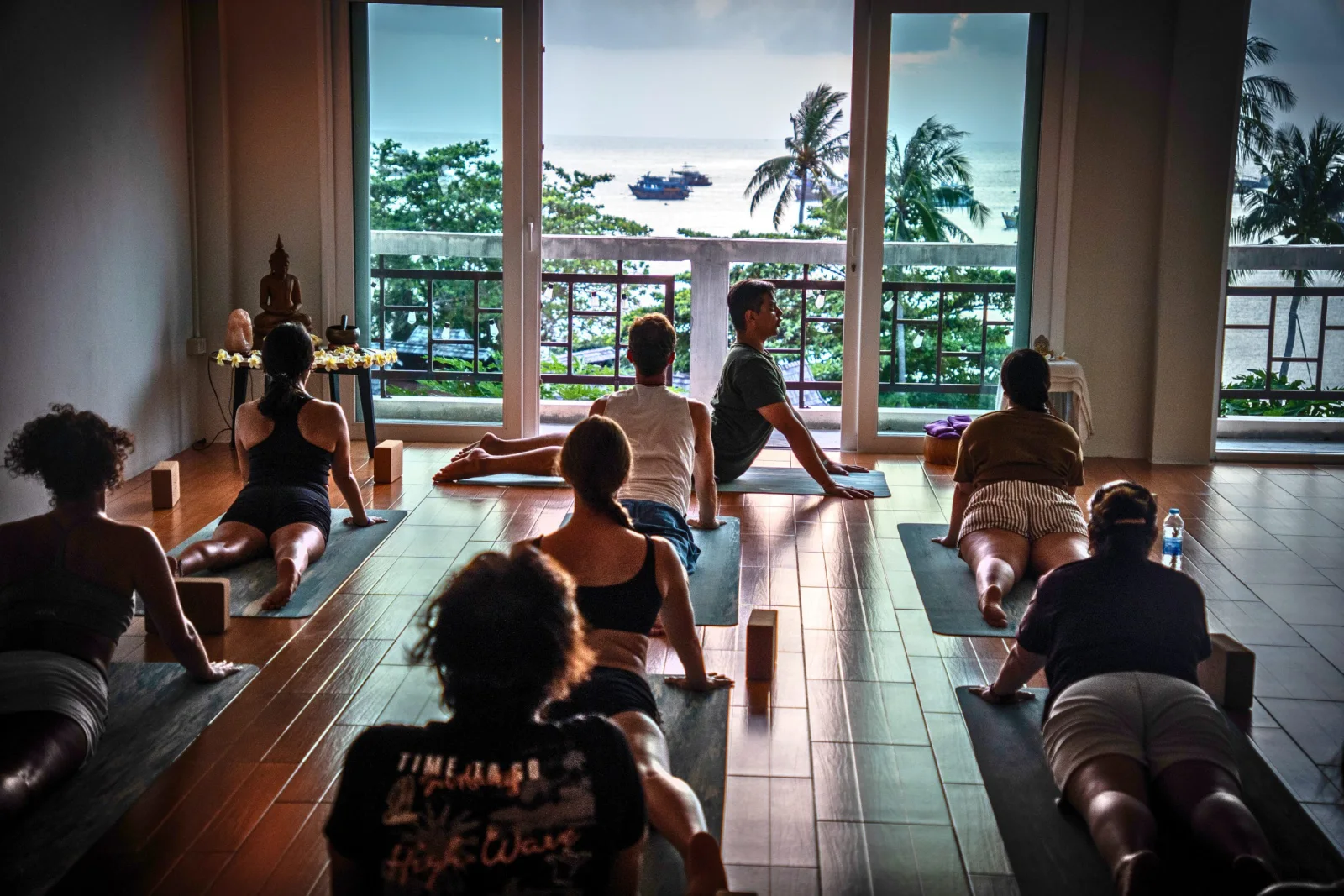
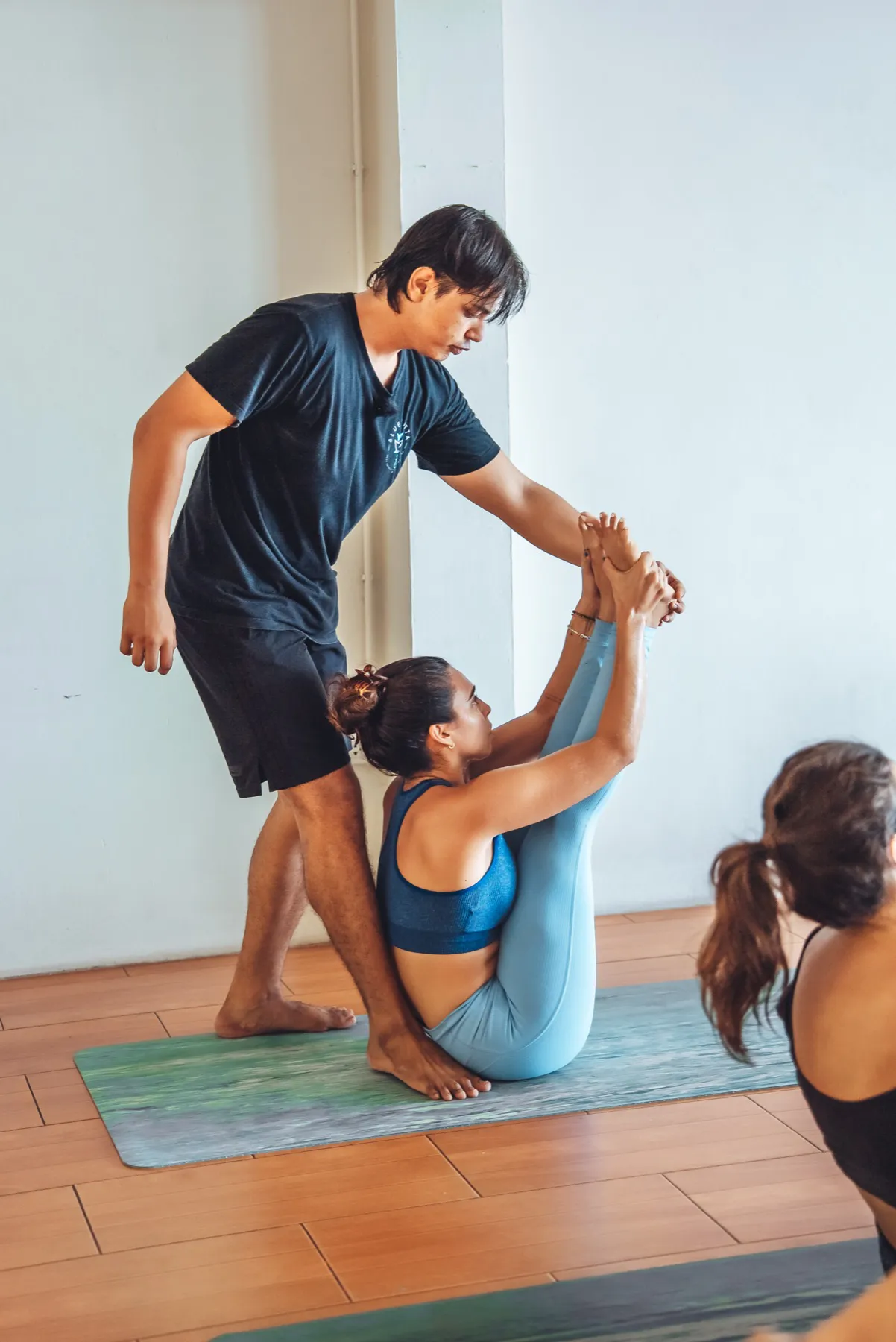
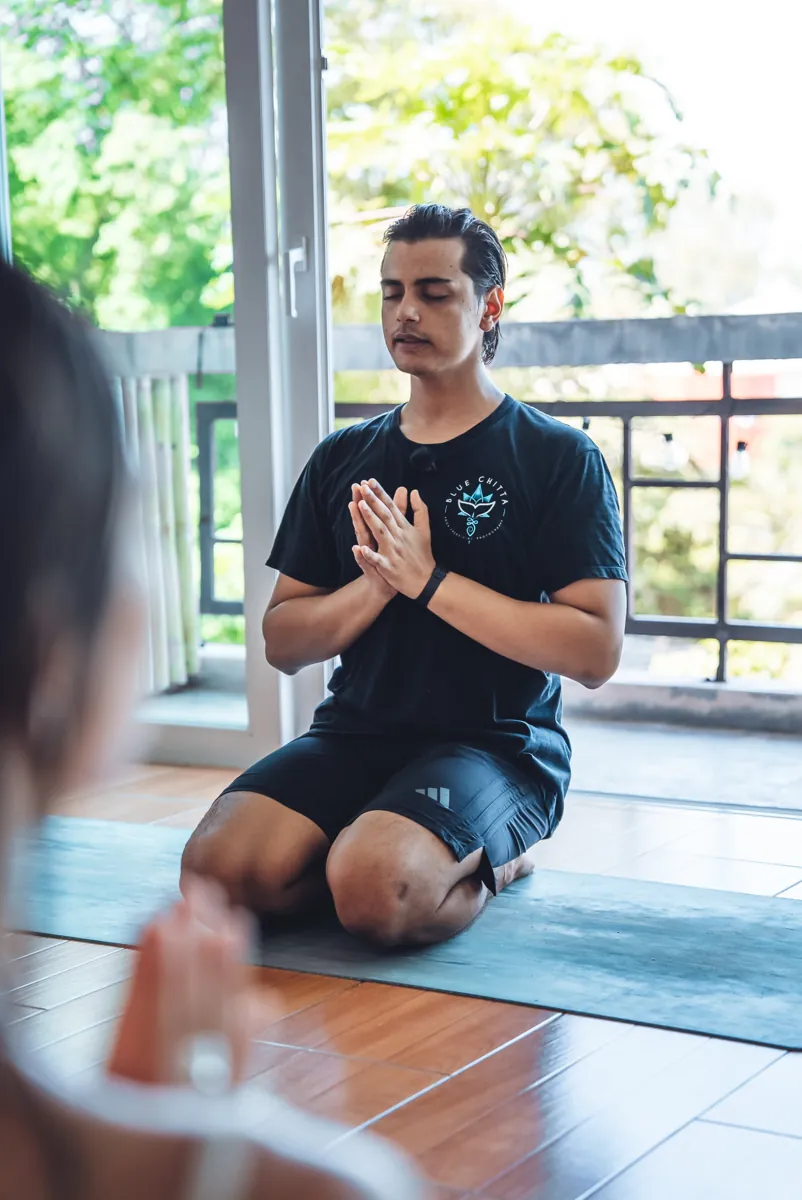
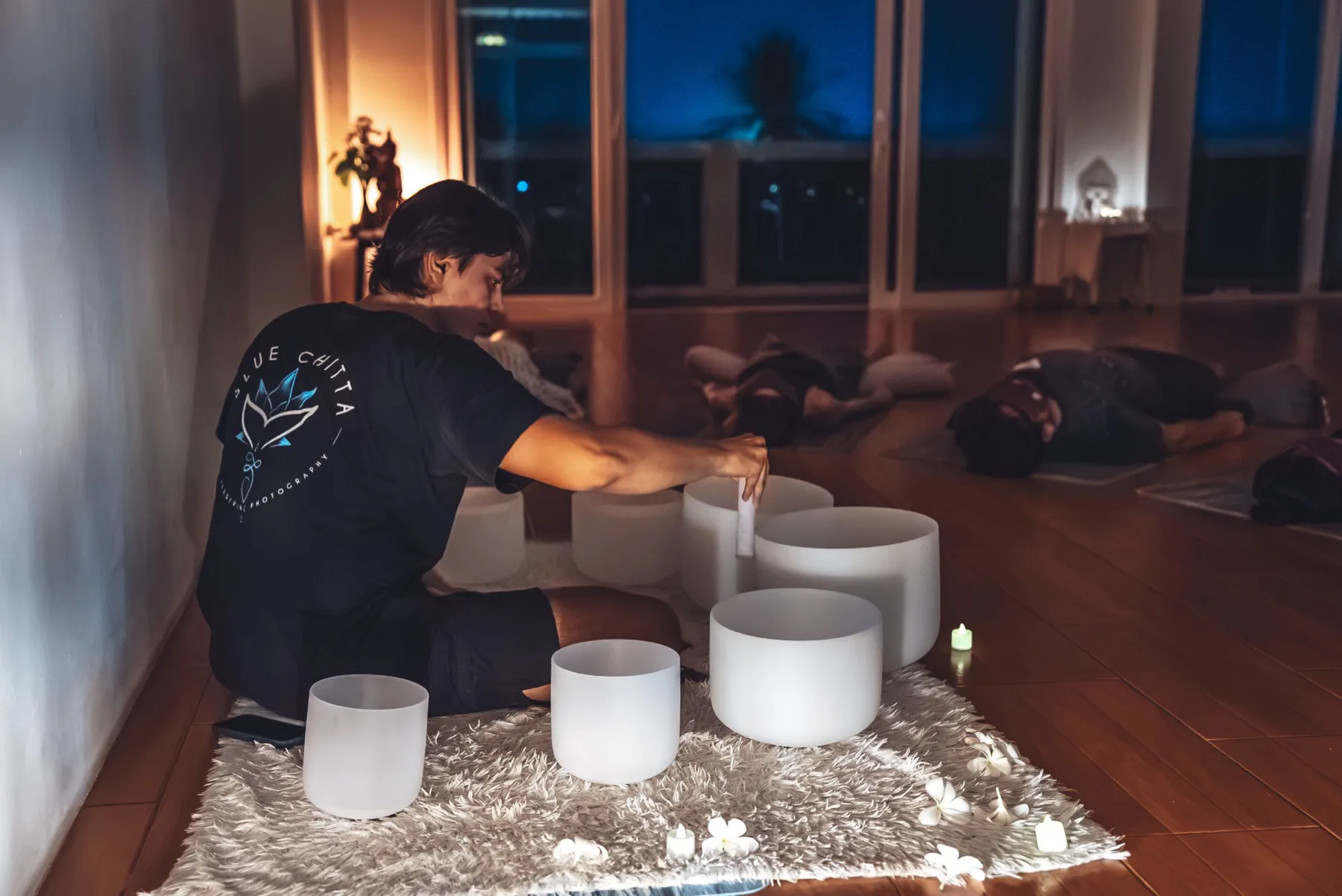
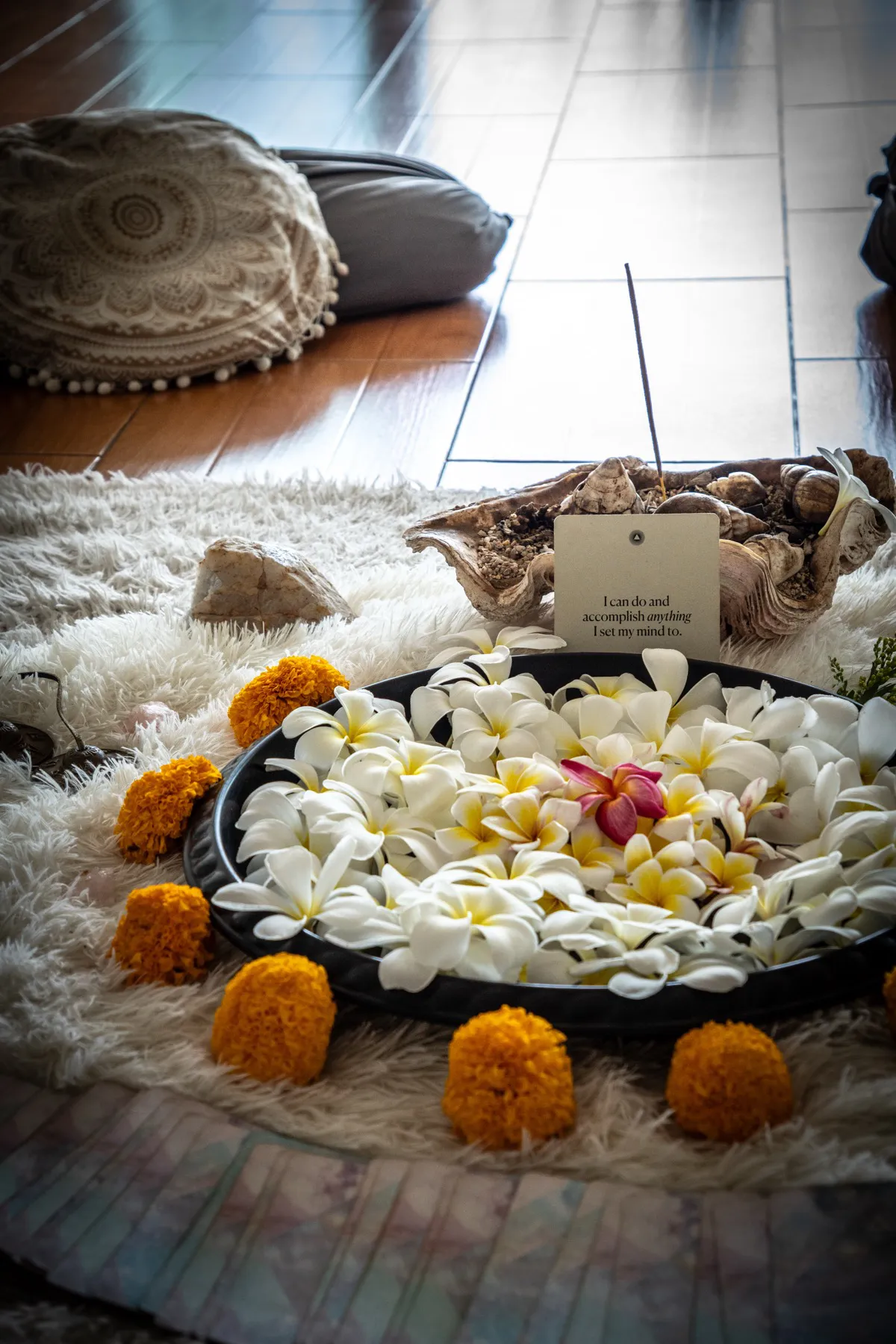
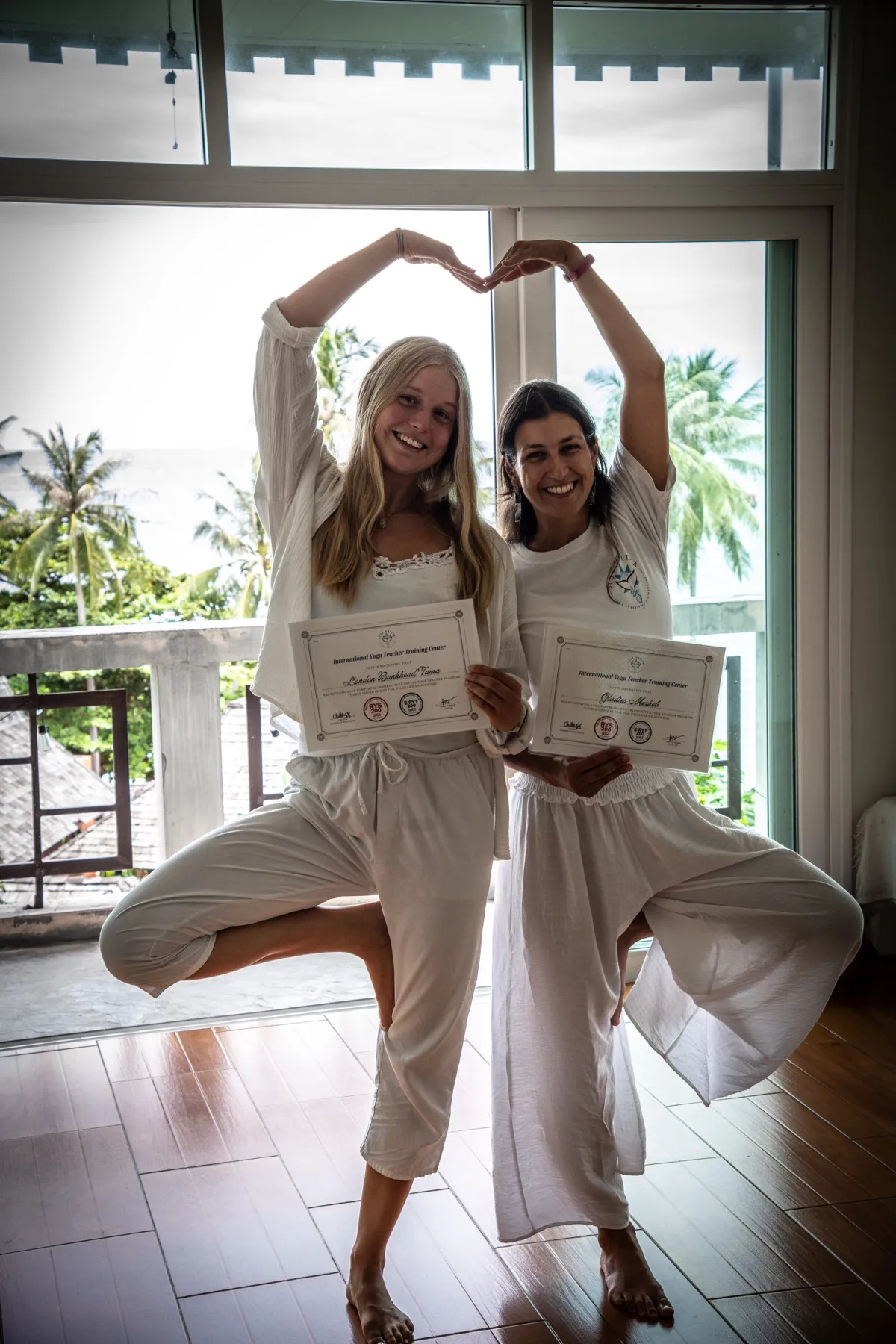
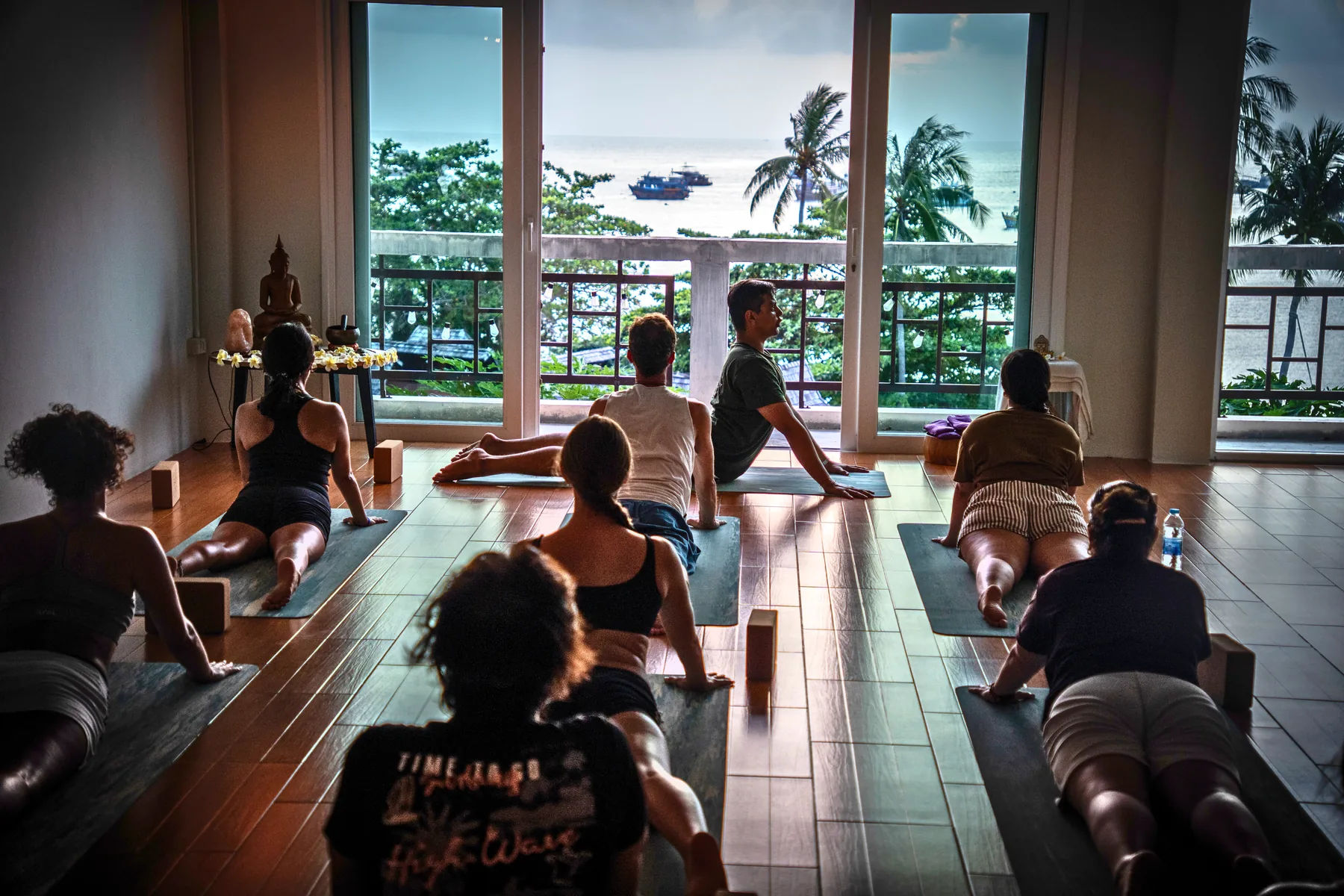
Students learning together during teacher training

200H Teacher Training

Four weeks of classical Ashtanga and Hatha, on a small Thai island, with a certificate at the end and a voice of your own.

From 100,000 thb

Duration
4 weeks, 200 hours
Intakes
Sep 14 – Oct 11, 2026 · Dec 1 – 28, 2026 · Jan 6 – Feb 2, 2027 · Feb 10 – Mar 9, 2027 · Mar 17 – Apr 13, 2027
Accreditation
Yoga Alliance — RYS 200, RYS 300, YACEP
Styles
Traditional Ashtanga and Hatha, plus philosophy, anatomy, pranayama and teaching methodology
Deposit
A non-refundable third of the program price (without stay) reserves your place

In short

Blue Chitta's 200-hour Yoga Teacher Training is a four-week Yoga Alliance accredited course on Koh Tao, Thailand, rooted in traditional Ashtanga and Hatha. It costs 100,000 thb with meals but without accommodation, or 114,000 thb with an on-site shared room. A non-refundable deposit of 30% reserves a place — 30,000 thb, or 34,200 thb with the room — and booking two months ahead earns a 10% early-bird discount.

How the time is spent.

The shape of the course, as it actually runs.

  1. A day on the training

    • 7:30–8:30 — Kriya & Pranayama
    • 9:15–10:30 — Ashtanga-Vinyasa
    • 10:30–12:00 — Breakfast at Prana Café and break
    • 12:00–1:00 — Theory: philosophy, anatomy or teaching methodology
    • 1:00–2:30 — Lunch at Prana Café and break
    • 2:30–3:30 — Anatomy
    • 4:00–5:00 — Ashtanga alignment
    • 5:45–6:45 — Hatha Yoga
    • 6:45–7:15 — Dinner at Prana Café
    • 7:15–8:15 — Yoga Nidra, meditation or Kirtan
  2. Your teachers

    • Anuj — from Mysore, India. BSc in Yoga from MJRP University, trained under Yogacharya Bharat Shetty, 600+ students taught across 8 teacher training courses in India. Your lead teacher for asana, philosophy and hands-on adjustments.
    • Chitta — founder of Blue Chitta. Left home at 17 for a nomadic life, founded Blue Chitta and Yoga Shak Montreal in 2014, taught in Bali, Thailand and Mozambique, and founded Blue Chitta Koh Tao in 2022. She guides Yin Yoga, Sound Healing and Breathwork.

What's included.

Everything below is part of the price. Anything that isn't, we list separately.

  • Yoga Alliance certification (200HR or 300HR)
  • All training materials plus a printed manual
  • Three vegetarian meals per day on course days
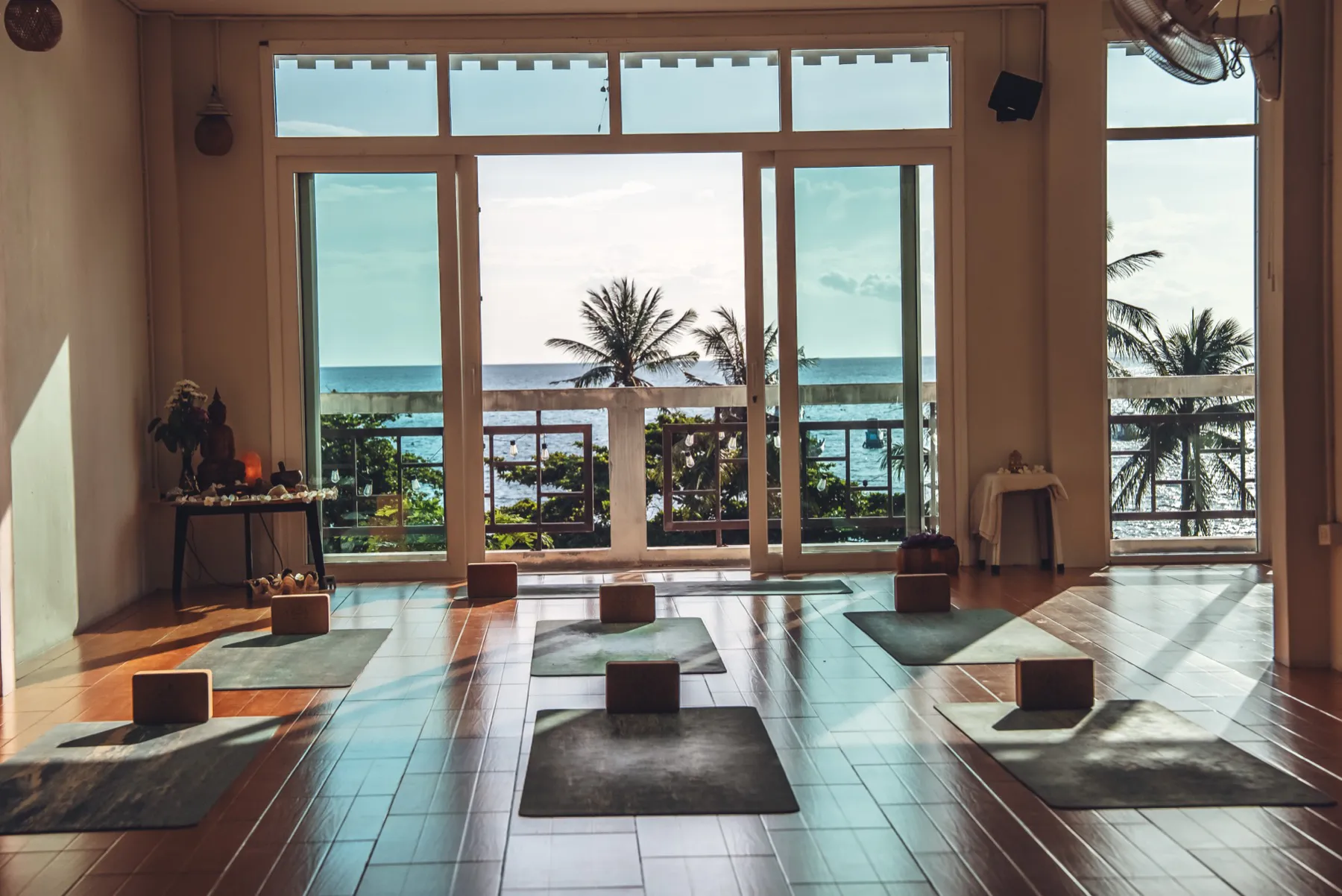
  • Sea-view, fully equipped shala for daily practice
  • Optional on-site shared room stay
  • Island integration: beach access and community
  • Snorkelling trip, ice bath and breathwork workshops
  • New moon and full moon ceremonies
  • Sunrise yoga at High the Moon
  • Internship opportunity: teach after graduation

A week on the training.

The schedule may change — this is an example week.

Example week: Week 1, 14–20 September 2026
TimeMonTueWedThuFriSatSun
08:00–08:45Pranayama (Liz)Pranayama (Liz)Pranayama (Liz)Pranayama (Liz)Rest DayPranayama & Meditation (Anuj)
09:15–10:30Ashtanga Practise (Anuj)Ashtanga Practise (Anuj)Ashtanga Practise (Anuj)Ashtanga Practise (Anuj)Rest DayFull Primary (Anuj)
11:00–12:15Opening Ceremony 13:00Theory Class (Anuj)Theory Class (Anuj)Theory Class (Anuj)Theory Class (Anuj)Rest DayTheory Class (Anuj)
14:30–15:30Opening Ceremony (cont.)Hatha Alignment (Liz)Hatha Alignment (Liz)Hatha Alignment (Liz)Hatha Alignment (Liz)Rest DayHatha Alignment (Liz)
17:45–18:45Hatha Yoga (Anuj)RestHatha Yoga (Anuj)Hatha Yoga (Anuj)Rest Day
19:15–20:00Sound Healing (Anuj)RestSound Healing (Anuj)Community DinnerRest DayYin Yoga Class (Liz)

Student Code of Ethics & Conduct.

What we ask of every student on the training. Download the PDF

Expectation

Completing a 200-Hour Yoga Teacher Training Course is the beginning of your journey—not the destination. This certification provides you with a strong foundation in yoga practice, philosophy, anatomy, pranayama, and teaching methodology, but it does not make someone an experienced teacher overnight.

Teaching with confidence, clarity, and wisdom comes through consistent personal practice, continued study, and real teaching experience. Every class you teach and every student you work with will become part of your education.

As a general guideline:

  • A 200-Hour TTC prepares you to begin teaching and continue learning.
  • A 300-Hour Advanced TTC (making a total of 500 hours) is recommended before considering advanced teaching responsibilities or assisting in teacher training programs.
  • Running your own Yoga Teacher Training Course should only be considered after completing at least 500 hours of formal training and gaining a minimum of one year of consistent teaching experience, along with sufficient knowledge, maturity, and practical skills.

Please understand that yoga cannot be mastered in a few weeks. There are many series, techniques, and advanced practices that require patience and proper preparation.

Based on your understanding, consistency, discipline, and overall progress throughout the course, your teachers will guide you on whether you are ready to explore more advanced yoga series or whether it is more beneficial to continue deepening and digesting the foundations you have already learned.

Our goal is not to teach you everything in a short time, but to help you build a solid foundation that will support a lifetime of practice, study, and teaching.

Remember: a certificate may mark the completion of a course, but your growth as a yoga teacher is a lifelong practice.
Yoga Teacher Training Course Guidelines
  1. Respect the Curriculum
    • The course follows a carefully planned curriculum based on traditional Hatha Yoga and Ashtanga Vinyasa Yoga.
    • Please trust the teaching sequence and avoid requesting additional classes, extra workshops, or different styles of yoga outside the curriculum.
    • Every subject has been scheduled intentionally to build your knowledge step by step.
  2. Understand the Scope of the Course
    • This TTC is rooted in traditional yogic teachings.
    • The training does not include modern fitness or entertainment-based styles such as Acro Yoga, Aerial Yoga, SUP Yoga, Puppy Yoga, Goat Yoga, or similar variations.
    • Our focus is on developing a strong foundation in authentic yoga practice, philosophy, anatomy, pranayama, meditation, and teaching methodology.
  3. No Alcohol, Smoking or Intoxicants
    • Consumption of alcohol, cigarettes, vaping, recreational drugs, or any intoxicating substances is strictly prohibited throughout the course.
    • These habits interfere with physical practice, mental clarity, and the yogic lifestyle we cultivate together.
  4. Follow a Yogic Diet
    • If meals are provided by us, they will be vegetarian/vegan.
    • A sattvic (pure) vegetarian diet supports digestion, recovery, concentration, meditation, and pranayama.
    • We strongly encourage students to avoid meat, alcohol, and excessively processed foods during the course to receive the maximum benefits of the training.
  5. Maintain Personal Hygiene
    • Bring your own yoga mat and towel.
    • Take regular showers and wear clean practice clothes.
    • Good hygiene creates a pleasant and respectful environment for everyone sharing the practice space.
  6. Be Punctual
    • Arrive at least 5 minutes before every class.
    • Late arrivals disturb the class and may not be permitted to join once practice has begun.
  7. Commit to Full Attendance (min. 80%)
    • Yoga Teacher Training is an intensive program.
    • Attend every lecture, practice, workshop, and assessment.
    • Excessive absences may affect your eligibility for certification.
  8. Practice Outside of Class
    • Learning does not end when class finishes.
    • Review your notes, study the manual, observe your own practice, and spend time in self-reflection every day.
  9. Respect Teachers and Fellow Students
    • Treat everyone with kindness, patience, and respect.
    • Listen attentively, avoid interrupting others, and create a supportive learning environment.
    • Every student progresses at a different pace.
    • Socializing with teachers during TTC is prohibited.
  10. Limit Phone Usage
    • Keep mobile phones on silent during classes.
    • Avoid texting, scrolling, or taking calls unless it is an emergency.
    • Be fully present during the learning process.
  11. Dress Appropriately
    • Wear comfortable, modest clothing suitable for yoga practice.
    • Avoid clothing that restricts movement or distracts other students.
  12. Embrace Yogic Discipline
    • Come with an open mind and a beginner's attitude.
    • Be willing to receive feedback, ask thoughtful questions, and continuously improve.
    • Growth often happens outside your comfort zone.
  13. Respect the Practice Space
    • Keep the shala clean and organized.
    • Return props after use.
    • Help maintain a peaceful atmosphere for everyone.
  14. Photography & Recording
    • Please ask permission before recording classes or taking photographs of teachers or fellow students.
    • Some sessions may not be recorded to preserve the learning experience.
  15. Confidentiality & Professionalism
    • During partner work, discussions, or sharing circles, respect the privacy of your fellow students.
    • What is shared in confidence should remain confidential.
  16. Certification Requirements
    • Certification is awarded based on 80% attendance, participation, practical teaching assessments, written/oral examinations, and demonstration of teaching the final class.
    • Completion of the course alone does not automatically guarantee certification — the above conditions need to be met.
  17. Take Responsibility for Your Practice
    • Inform teachers of any injuries or medical conditions before practice.
    • Practice mindfully and never force your body into postures.
    • Yoga is about awareness, not competition.

Stay consistent, be curious, support one another, and enjoy every step of your yogic journey.

Forever Students · Forever Teachers

Rooted in the eightfold path

Our Yoga Alliance accredited training brings together the power of traditional Ashtanga and the softness of Hatha. It explores the classical eightfold path — a structured journey from ethical discipline and self-study through to concentration and meditation. Through dedicated asana practice, pranayama, philosophy and alignment study, students build strength, stability and self-understanding.

A workshop circle at Blue Chitta

Practice, swim, breathe, rest, repeat

Practise in a fully equipped shala with a tropical sea view, swim a few steps from your accommodation, and eat fresh plant-based food from our on-site Prana Café. There is a weekly dinner at one of our favourite local restaurants, and the Friday night Community Dinner and Jam Session — always a highlight.

Your home during the training

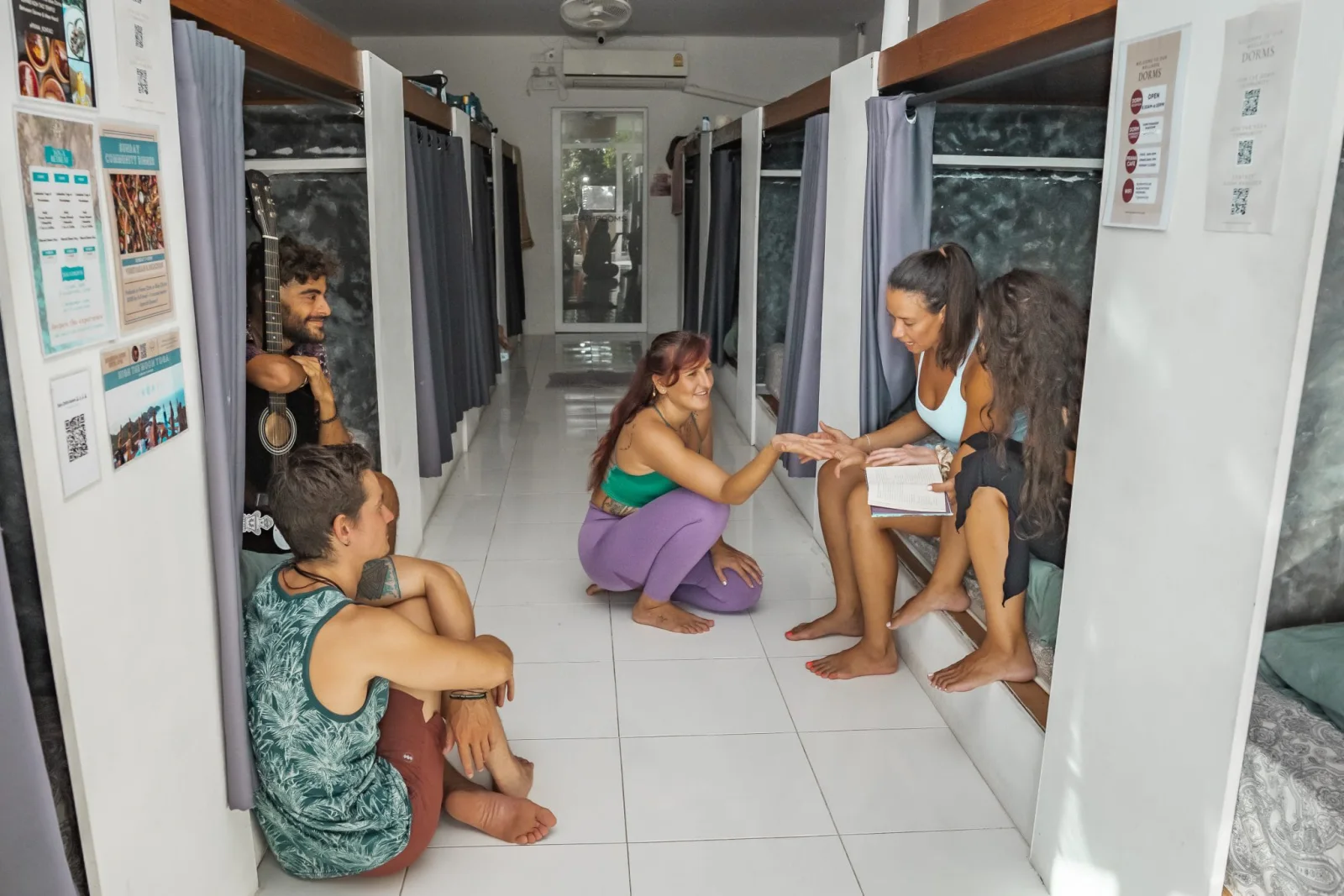
Accommodations are simple, soulful and steps from the shala. Stay in our on-site shared dormitory, or take a private room nearby — we recommend Koh Tao Regal Resort and Koh Tao Beach Club. Wherever you land, you stay close to the energy of the training.

Shorter and further paths

If four weeks is not your shape right now, we also run a 50-hour Yoga Immersion, a 100-hour Foundation Training, and a 300-hour Advanced TTC for teachers who are already certified.

Not sure yet? Ask us.

Tell us your dates and your level, and we'll come back with the honest answer, including if something else here suits you better.

Ask about 200H Teacher Training

About 200H Teacher Training, or anything near it.

Share an email or a phone number so we can get back to you.

Questions, answered clearly.

The useful details first. Ask the team when your plans need a specific answer.

Do I need previous yoga teaching experience?

No. Our 200-Hour Yoga Teacher Training is open to dedicated practitioners who wish to deepen their practice or become certified yoga teachers. No previous teaching experience is required.

Do I need to be advanced in yoga?

Not at all. You don't need to master advanced poses or have years of experience. A regular yoga practice, an open mind, and a willingness to learn are all you need.

Can I join even if I don't want to teach yoga?

Absolutely. Many students join the training for personal growth, self-discovery, and to deepen their understanding of yoga. Teaching is just one of the many outcomes of the experience.

What styles of yoga are taught?

Our training is rooted in Hatha and Ashtanga Yoga while also covering philosophy, anatomy, pranayama, meditation, alignment, teaching methodology, and hands-on practice.

Is the training Yoga Alliance certified?

Yes. Upon successful completion, graduates receive a Yoga Alliance recognised 200-Hour Yoga Teacher Training certification.

What is included in the course?

The training includes daily yoga classes, lectures, course materials, vegetarian meals at Prana Café, workshops, and certification upon successful completion. Stay in the on-site shared dorm is the 114,000 thb option; the 100,000 thb price is without accommodation.

What happens after I graduate?

You'll be qualified to begin teaching yoga, deepen your personal practice, or continue your education with our 300-Hour Advanced Yoga Teacher Training. There is also an internship opportunity to teach here after graduation.

What if I can't commit to the full 200 hours?

Blue Chitta also offers a 50-Hour Yoga Immersion, a 100-Hour Foundation Training, and a 300-Hour Advanced TTC.

From 100,000 thb28 days · 200h Yoga AllianceAsk about the next intake

Tell us where you are. We'll help you find the next breath.

No course catalogue to decode. Share your level, dates and what you want from Koh Tao.

Ask about the next intake