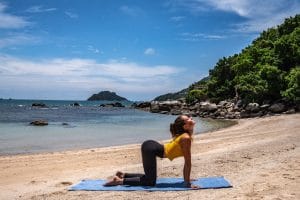
At Blue Chitta, we say it often: your breath is your most important piece of equipment. Before technique, before depth, before anything else – there is your breathing.
Whether you’re just starting a freediving course or refining your practice, understanding how and why we breathe is what makes freediving safe, efficient, and deeply enjoyable.
The 5 Goals of the Breathe-Up (Your Pre-Dive Ritual)
A “breathe-up” is the series of breaths you take before holding your breath. It’s not random—it’s intentional. Every inhale and exhale serves a purpose.
1. Slow Down the Heart Rate
Why: A slower heart rate means lower oxygen consumption.
How: Make your exhale longer and slower than your inhale. This simple shift spontaneously slows down the heartbeat.
Safety Tip: Exhales are always passive, never forcing the air out to avoid hyperventilation.
2. Activate the Parasympathetic Nervous System
Why: You can’t freedive comfortably in a stressed state. Relaxation is essential for equalization and comfort underwater.
How: Breathe into your belly (diaphragmatic breathing). This instantly tells your body: you’re safe and automatically tunes into the parasympathetic response of your nervous system.
3. Balance Oxygen (O₂) and Carbon Dioxide (CO₂)
Why: Oxygen fuels your dive – but CO₂ is what triggers the urge to breathe. You need both in balance.
How:
- Inhale fully and gently (active inhale)
- Exhale slowly and passively (never force it)
Forcing the exhale can lead to hyperventilation, which increases the risk of blackout and compromises your safety.
4. Anchor the Mind into Presence
Why: Depth comes from presence. A distracted mind creates tension.
How: Focus only on the present moment, your breath, and body sensations. The more present you are during the breathe up, the more present you will be during your dive.
5. Relax the Body
Why: Tension consumes oxygen. Relaxation conserves it.
How: Scan your body as you breathe – soften your shoulders, face, jaw, and muscles. Let the water hold you fully.
Understanding CO₂: Your Inner Alarm System
Here’s something many beginners don’t realize:
The urge to breathe is not caused by low oxygen, but by rising CO₂.
As you hold your breath:
- Oxygen is used by your body
- CO₂ builds up
Your body doesn’t “feel” low oxygen—but it does feel rising CO₂. That’s what creates contractions and the urge to breathe.
This is why balance is key. If you remove too much CO₂ (through over-exhaling), you delay the urge to breathe – but oxygen can drop silently, increasing the risk of hypoxia and blackout.
Why Hyperventilation is Dangerous
Hyperventilation (fast, shallow, or forceful breathing) might feel like you’re “getting more oxygen”—but it actually disrupts your system.
Effects of hyperventilation:
- Faster heart rate
- Activated stress response
- Low CO₂ levels
- An anxious or dizzy mind
It can also lead to an early blackout without warning.
This is why proper guidance in a Freediving Course is essential. Breathing is powerful – and it needs to be approached with deep reverence and respect.
The Ideal Freediver’s Breathing Pattern
Your breathe-up should feel slow, smooth, and effortless:
- Inhale: deep, slow, and active (from belly to chest)
- Exhale: long, passive, and relaxed
- Pause: a natural 1-second of stillness between breaths
This is inspired by yogic breathing (pranayama), adapted for the ocean.
Think of it as a rhythm—not something forced, but something you fall into.
Recovery Breathing: After the Dive
Breathing doesn’t end when you surface—it becomes even more important.
After a dive, we use recovery breathing (also called hook breathing) to quickly restore oxygen levels:
- Short, passive exhale
- Quick Active inhale(with a “hook” hold)
This helps bring oxygen back to the brain and body efficiently.
Becoming an Expert of Your Breath
Freediving is a journey of awareness. Over time, your breathing will evolve—just like your depth.
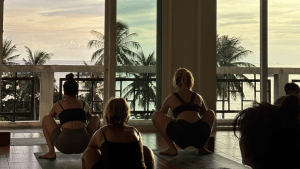
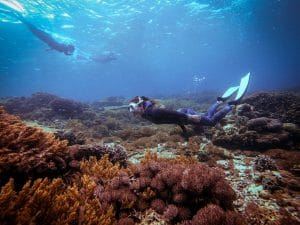
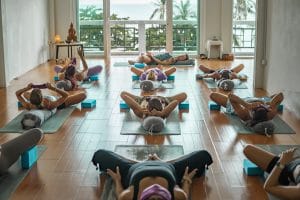
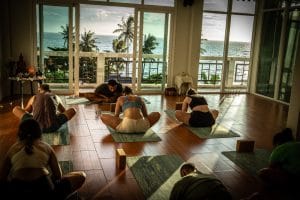
At Blue Chitta, we combine freediving with yoga, pranayama, and meditation to help you understand your breath on a deeper level—not just technically, but physically, mentally, and energetically.
Experience this in our Freediving Retreats
where breath, movement, and ocean come together.
The Takeaway
Your breath can calm you – or stress you. It can support your freedive—or work against it.
When used with awareness, it becomes your greatest ally.
Slow it down. Feel it. Trust it.
That’s where every good freedive begins.
Want to learn how to use your breath safely and effectively? Explore our courses or message us on WhatsApp -we’re here to guide you every step of the way.