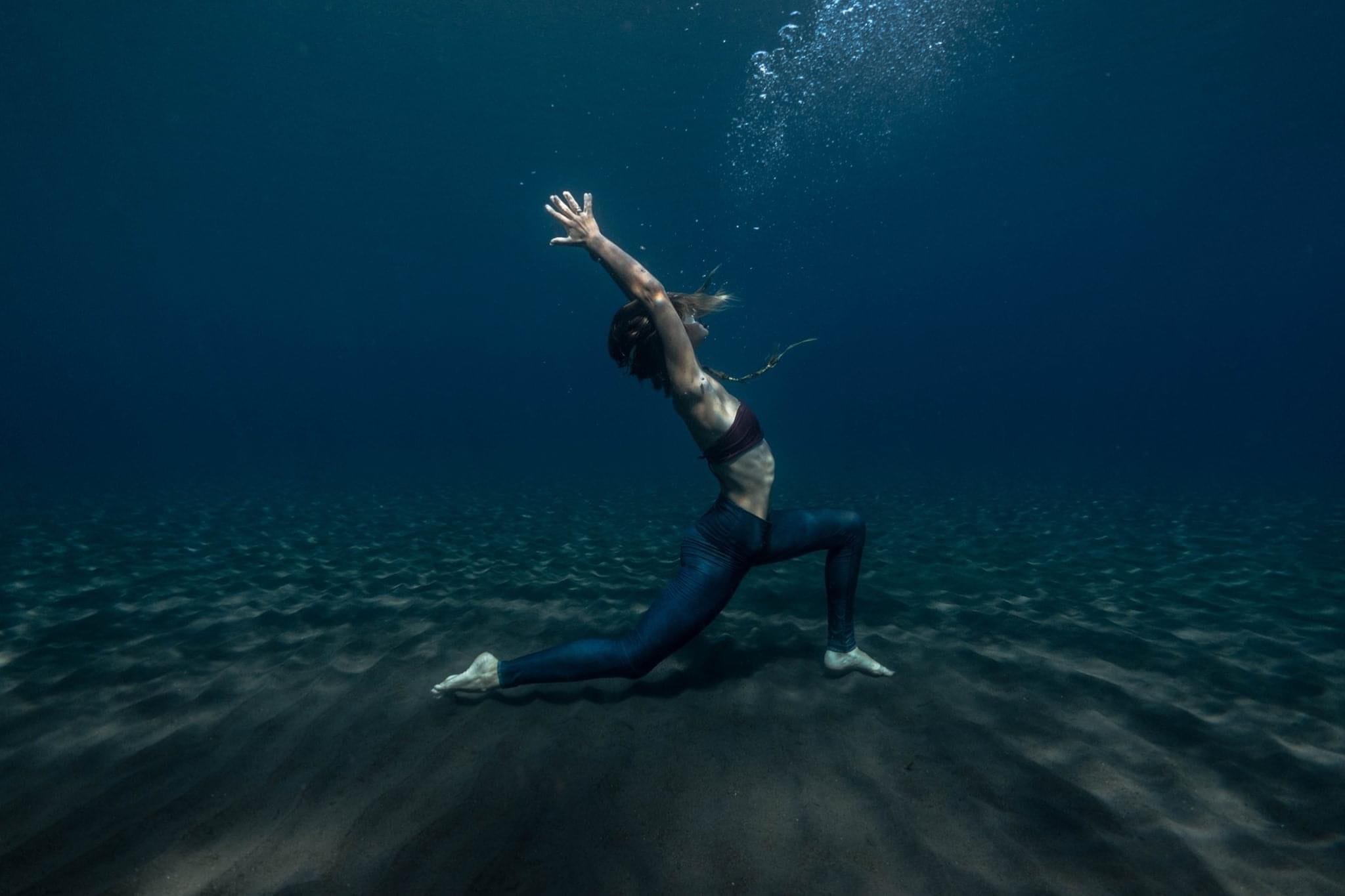
At Blue Chitta, we often say that freediving is not just about going deeper in the ocean—it’s about going deeper within yourself. That’s exactly where yoga comes in. While they may seem like two separate practices, freediving and yoga are deeply connected through the breath, the nervous system, and your inner awareness. If you’re exploring a freediving course or considering a freediving retreat, understanding this connection will completely transform your experience.
The Real Secret to Depth: Relaxation
In freediving, progress doesn’t come from force – it comes from relaxation.
The deeper you go, the more your body is exposed to pressure. If your mind is worried or your body is tense, you won’t be able to adapt to the increasing water pressure. This is why yoga becomes such a powerful tool. Through mindful movement and breathwork, you learn how to release unnecessary tension and stay calm under pressure.
This is also why we integrate practices like Yin Yoga and Meditation into our programs. These help you slow down, soften, and build the kind of awareness that directly improves your freediving.
Explore how this comes together in our Freediving Retreat Experience
Your Breath: The Bridge Between Worlds
Both freediving and yoga revolve around one essential element: your breath.
In yoga, you learn how to control and expand your breathing through techniques like pranayama. In freediving, that awareness becomes essential. The way you breathe before you freedive will determine how comfortable you will feel underwater.
- Before diving: slow, deep belly breathing helps activate your parasympathetic nervous system (your “rest and relax” mode)
- After diving: faster recovery breathing helps re-oxygenate your body and release excess CO2
The way you breathe has a direct effect on a holistic level. This means it will have a spontaneous effect on how you feel physically, mentally, emotionally, energetically, and also spiritually.
When you train your breath on land, you unlock new potential underwater.
You can dive deeper into this in our Freediving Courses.
Training Your Nervous System
A key concept in both yoga and freediving is nervous system regulation.
The nervous system has 2 main responses: sympathetic and parasympathetic. Sympathetic is the Fight or Flight response associated with stress and fast movement. Parasympathetic is the relaxation response known as Rest & Digest.
If your nervous system is in the stress response, it becomes very uncomfortable and almost impossible to freedive. But when your nervous system is calm, freediving unfolds naturally, and you can access your aquatic mode. Aquatic mode is when your heart rate slows down, your movements become slow and fluid, your mind is peaceful, and your body adapts with ease to the increasing water pressure. Yoga and meditation teach you how to shift from stress to calm on demand. This is one of the most valuable skills a freediver can develop—not just for diving, but for life.
A Holistic Practice: Beyond the Physical
Both freediving and yoga are holistic practices, meaning they go beyond just the physical body. They influence multiple layers of your experience:
- Physical body: increase your lung capacity, practice nervous system regulation
- Mental body: overcoming limiting beliefs, your thoughts shape your reality
- Emotional body: transcending fear, stress, and stored emotions
- Energy body: improving the flow of vital energy (prana)
- Spiritual body: feeling connected to something bigger than yourself
Many freedivers notice that as they go deeper in the ocean, emotions and thoughts naturally surface. Yoga provides the tools to process and release these, allowing for a more meaningful freediving experience.
Why We Combine Them at Blue Chitta
This is why our retreats are designed as more than just dive training. In our
Freediving Retreats, you’ll experience a full daily flow that supports your journey:
- Morning Meditation & Breathing to focus your mind and warm up your lungs
- Healthy, nourishing meals to support your vital energy and recovery
- Evening Yin Yoga to release tension and tune into the parasympathetic response
- Optional breathwork & ice bath to practice going from a stressful to a peaceful state using the power of your breath and your mind
Everything is designed to help you feel better, dive deeper, and connect more fully – to yourself and the ocean.
The Takeaway
Freediving and yoga are not separate paths – they are two expressions of the same journey.
When combined, they allow you to:
- Feel Safe
- Experience the power of your Breath
- Move with awareness
- And access a state of presence that goes far beyond the surface
Whether you’re new to freediving or looking to deepen your practice, integrating yoga and meditation might be the missing piece.
And once you experience it, it becomes clear –
The real depth is not just in the ocean, but within you.
Ready to experience it for yourself? Explore our courses or message us on WhatsApp – we’re here to guide you.